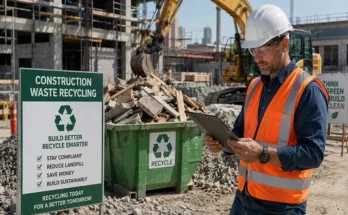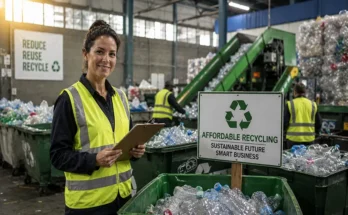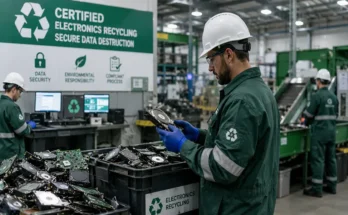


In the modern industrial landscape, the traditional concept of “waste disposal” is rapidly becoming obsolete. Progressive organizations are shifting their focus toward “resource recovery,” viewing every byproduct of their operations not as a liability to be discarded, but as a secondary raw material with inherent value. For corporations aiming to meet ambitious Environmental, Social, and Governance (ESG) targets and contribute to a circular economy, selecting the right industrial recycling partner is no longer just a logistical decision—it is a critical strategic imperative.
Choosing a partner that aligns with your company’s sustainability goals, regulatory requirements, and operational needs requires rigorous due diligence. The wrong choice can lead to compliance failures, reputational damage, and inefficient resource utilization.
The Due Diligence Checklist
Evaluating a potential recycling partner begins with an objective assessment of their credentials, capabilities, and operational transparency.
1. Certifications and Compliance
At a baseline, your partner must possess the necessary licenses to operate in your jurisdiction. However, true leadership in the space is evidenced by independent, third-party certifications. Look for partners who maintain:
- ISO 14001: Demonstrating a commitment to an effective environmental management system.
- R2 or e-Stewards: Essential for any firm handling electronic or complex industrial hardware, ensuring responsible recycling and data security.
- ISO 9001: Indicating consistent quality management processes.
2. Traceability and Transparency
The core of your ESG report relies on accurate data. You must be able to prove where your waste ends up. A high-quality partner provides a documented “chain of custody.” They should be able to track materials from your facility, through the sorting and processing phases, to the final end-market destination. If a partner cannot provide verifiable reporting, they represent a significant compliance risk.
3. Specialization
Industrial waste is rarely monolithic. Whether you are dealing with scrap metal, hazardous chemical byproducts, plastics, or complex e-waste, ensure the vendor has the specific equipment and technical expertise to handle your unique waste stream. A generalist recycler may struggle to achieve the high recovery rates that a specialized firm can provide.
Selection Criteria for Industrial Waste Partners
| Criteria | Why It Matters | What to Look For |
| End-Market Transparency | Avoids “sham recycling” | Clear documentation of where materials are sold. |
| Material Recovery Rate | Maximizes circularity | High percentages of material diverted from landfills. |
| Data Reporting | Crucial for ESG auditing | Granular, digital, and audit-ready reporting. |
| Logistical Footprint | Reduces scope 3 emissions | Efficient collection routes and low-carbon transport. |
Financial and Operational Integration
A successful partnership balances the cost of service with the value of recovered materials.
Revenue Sharing vs. Fee-for-Service
Depending on the commodity value of your waste (e.g., copper, aluminum, or high-grade polymers), you may be able to negotiate a revenue-sharing model. In this arrangement, the recycler pays a portion of the commodity value back to your company. Conversely, for hazardous or complex streams that require expensive processing, you may pay a fee-for-service. Understanding which model applies to your specific streams is vital for operational budgeting.
Logistical Efficiency
Waste management is an extension of your supply chain. Consider the environmental impact of the recycling process itself. A partner that utilizes multi-modal transport or local processing facilities significantly reduces the “Scope 3” carbon footprint of your waste management program.
Data Reporting
Work with vendors who offer digital portals. You need real-time or monthly reports that provide actionable insights, such as total weight diverted from landfills, greenhouse gas emissions avoided, and total revenue/cost per material category.
Red Flags and Pitfalls
Sustainability Managers should remain vigilant against “greenwashing” in the waste sector. Common warning signs include:
- Lack of Downstream Visibility: If a vendor refuses to share their downstream processor list or claims “proprietary” information as an excuse to avoid transparency, walk away.
- Inconsistent Reporting: If data reports arrive sporadically or lack granular detail regarding material types, they may not be tracking materials as thoroughly as they claim.
- Low Recovery Rates: A high reliance on landfilling—even if disguised as “waste-to-energy”—should be scrutinized. True circularity focuses on recovery and reuse.
Pro-Tip: Always conduct a site visit. An on-site audit of a facility will tell you more about a company’s operational standards than any marketing brochure. Look for cleanliness, safety protocols, and the actual state of the equipment.
Strategic Partnership Framework
To move beyond a transactional relationship, treat your recycler as an extension of your operations team:
- Integrate Early: Invite your recycling partner to consult during the product design phase. Often, minor changes in material selection can drastically improve recyclability.
- Continuous Improvement: Set annual goals for waste diversion improvements.
- Communication: Hold quarterly business reviews to discuss commodity market trends and potential operational efficiencies.
Selecting an industrial recycling partner is a long-term investment in your company’s reputation and environmental performance. By prioritizing transparency, vetting downstream processes, and aligning financial models with sustainability objectives, you transform waste management from a cost center into a strategic advantage that demonstrates your commitment to a sustainable future.