
In the 2026 construction landscape, debris is no longer “just trash”—it is a critical operational variable that directly impacts your project margins, site efficiency, and ability to win future bids. With rising landfill taxes, tightening environmental regulations, and the increasing mandate for digital waste tracking, general contractors who master construction and demolition (C&D) waste management gain a significant competitive advantage.
This guide outlines how to navigate the complex world of C&D recycling, minimize your disposal costs, and ensure your sites are audit-ready.
The Contractor’s Audit: Maximizing Salvage Value
The most common mistake contractors make is treating mixed C&D waste as a single, homogenous stream. This “one-bin” approach is the most expensive way to dispose of waste, as it invites high tipping fees and contamination penalties.
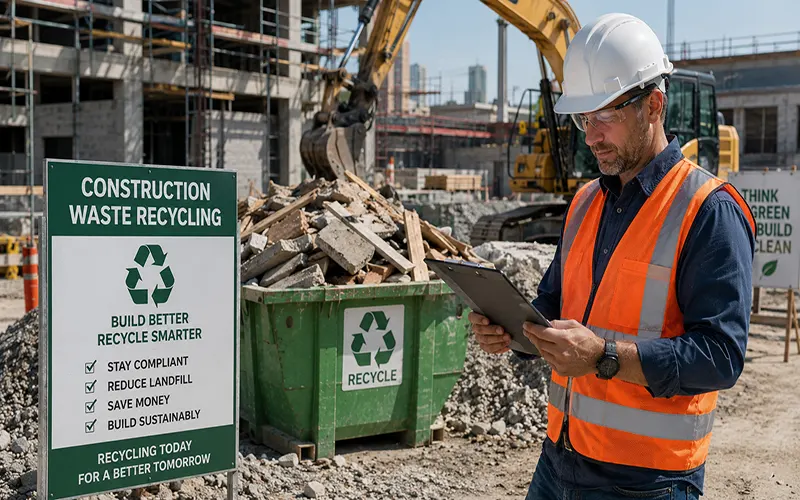
To maximize your ROI, implement on-site source separation. By segregating waste at the point of origin, you transform “trash” into “commodities”:
- Inert Materials: Concrete, bricks, and asphalt can often be processed on-site for subbase or fill, or sent to recyclers who crush them into high-value aggregate.
- Scrap Metal: Ferrous and non-ferrous metals consistently hold commodity value and should be isolated in dedicated bins to maximize return.
- Clean Wood: Untreated wood can be recycled into mulch, biomass fuel, or engineered wood products.
- Drywall & Gypsum: In many jurisdictions, clean, unpainted drywall is now a high-priority material for closed-loop recycling.
Recyclability Potential: High-Value vs. Low-Value Waste
| Material Type | Recycling Potential | Management Strategy |
| Metals (Copper, Steel, Alum) | High | Segregate in dedicated locked bins. |
| Concrete/Asphalt | High | On-site crush for backfill or haul to aggregate yard. |
| Untreated Wood | Medium | Separate from mixed waste; chip for biomass. |
| Gypsum/Drywall | Medium | Keep dry; partner with specific gypsum recyclers. |
| Mixed General Waste | Low | Minimize through strict source separation. |
Vetting Your Recycling Partner
Choosing the right recycler in 2026 requires moving beyond simple haulage prices. You need a partner that acts as an extension of your sustainability and compliance team.
1. Essential Certifications
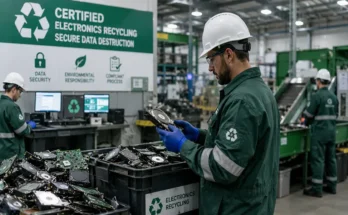
Look for partners holding NAID, R2, or e-Stewards-equivalent environmental certifications. For LEED-focused projects, ensure they are certified to handle waste in compliance with LEED v4.1 requirements. A top-rated recycler should provide proof that your materials are diverted from landfills, not just “dumped” at a lower-cost facility.
2. Digital Reporting & Tracking
Starting in late 2026, digital waste tracking is becoming a regulatory standard in many regions. Your partner must provide:
- Real-time Dashboards: Tracking your waste volume, composition, and diversion percentages by site.
- Certified Weight Tickets: Essential for project close-outs and LEED documentation.
- Audit-Ready Documentation: Automated waste transfer notes that satisfy local environmental inspectors.
3. Service Level Agreements (SLAs)
A “cheap” recycler is expensive if they don’t show up. Your SLA should guarantee site productivity:
- Same-day Swap-outs: Critical for high-traffic sites where waste bins occupy valuable footprint.
- Wait-and-Load Services: For projects with strict site access or urban constraints.
Operational Best Practices for 2026
Efficiency in 2026 is about “Lean Construction”—designing out waste before it ever hits the skip.
- Just-in-Time Material Delivery: Coordinate deliveries to match your construction schedule. Excess materials left on-site are susceptible to damage, weather-related degradation, and theft, all of which ultimately contribute to waste.
- Subcontractor Training: Your waste management plan is only as strong as the last sub who drops a bin. Mandate “sorting training” during site inductions. Clear signage—using photos, not just text—is essential for diverse workforces.
- Digital Waste Tracking: Use software platforms like Green Halo or SmartWaste to integrate waste management into your project management suite. These tools automate the paperwork, ensuring you are audit-ready at all times.
In 2026, efficient construction waste management is a core business competency. By prioritizing source separation, leveraging technology to automate compliance, and partnering with recyclers who prioritize data-driven diversion, you do more than just save on tipping fees. You build a reputation for reliability and sustainability—the two traits most highly valued by modern project owners. Start planning your waste management as rigorously as you plan your structural steel procurement, and watch your project margins improve.