

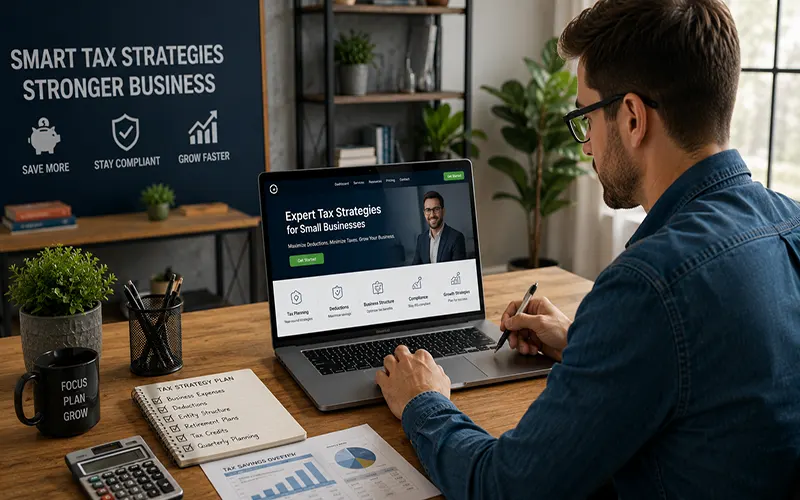
For many small business owners, tax season is an annual exercise in reactive panic. It is a time defined by frantically organizing receipts, rushing to meet filing deadlines, and hoping that no red flags appear for an audit. However, the most successful enterprises have moved past this “filing-only” mindset. They have embraced a proactive approach: Year-round tax strategy.
Transitioning from simple tax preparation to professional tax strategy is a defining moment for any business. It shifts the focus from merely documenting what already happened to optimizing your financial structure to minimize liability before the year even ends. Today, an array of online platforms allows business owners to access high-level fractional CFOs and specialized CPAs, providing enterprise-grade tax intelligence at a scale suited for small businesses.
The Difference Between “Filing” and “Strategy”
It is crucial to understand that tax preparation and tax strategy are not the same thing.
- Tax Preparation is the act of filling out forms and reporting historical financial data to government agencies. It is a compliance requirement, but it is not inherently value-additive.
- Tax Strategy is the art of structuring your business, timing your income and expenses, choosing the right retirement vehicles, and leveraging specific tax credits to lower your overall tax burden legally.
The reason most small businesses pay more than they should is that they hire a tax preparer, not a tax strategist. The best online platforms bridge this gap by integrating your bookkeeping data with ongoing consulting, allowing for adjustments to your financial path throughout the fiscal year.
Core Features of Top-Tier Platforms
When selecting a platform to manage your business’s tax health, prioritize services that offer more than just a software login. Look for these three pillars:
1. Proactive Planning
An excellent platform does not wait for April. It offers quarterly tax estimation sessions where your consultant reviews your profit-and-loss statements, forecasts your end-of-year liability, and suggests moves—like accelerating equipment purchases or maximizing retirement contributions—to reduce that liability.
2. Deep System Integration
Strategic advice requires accurate data. The best services integrate directly with your accounting software (such as QuickBooks Online or Xero). This real-time data flow allows your consultant to see your financial health in context, providing advice that is grounded in your current cash flow rather than months-old reports.
3. Industry-Specific Expertise
Generalist advice is rarely the best advice. If you run an e-commerce business, your tax strategy regarding inventory and sales tax nexus is fundamentally different from a consultancy-based business. Ensure your chosen platform provides access to professionals who have documented experience in your specific business vertical.
Tax Preparation vs. Tax Strategy Services
| Feature | Tax Preparation (Basic) | Tax Strategy (Advisory) |
| Frequency | Once per year | Monthly/Quarterly |
| Primary Goal | Compliance/Filing | Optimization/Savings |
| Communication | Transactional/As-needed | Proactive/Consultative |
| Value Add | Risk avoidance | Increased cash flow |
Understanding the Landscape of Options
The modern digital tax space is divided into three primary models:
- Hybrid Services (e.g., Bench, Pilot): These platforms pair automated bookkeeping software with a dedicated human accountant. They are excellent for businesses that need to clean up their books and want a single point of contact for routine tax questions.
- Virtual CPA Firms: These firms operate entirely online but function like a traditional high-touch accounting office. They offer fractional CFO services, meaning you get a senior-level strategist who helps with long-term financial planning, exit strategies, and complex business restructuring.
- Automated Strategy Tools: These are AI-driven platforms that monitor your business accounts in real-time to track potential deductions and identify tax-saving opportunities. While highly efficient for simple businesses, they often lack the human intuition required for complex structuring decisions.
Tax strategy is not a luxury reserved for large corporations; it is an essential investment for small businesses aiming for growth and stability. By moving away from reactive filing and toward an ongoing, strategic partnership with a professional consultant, you protect your company from audit risks and keep more of your hard-earned revenue. Remember, every dollar saved through sound tax planning is a dollar that can be reinvested into the growth of your business. If you are only thinking about taxes in April, you are likely leaving money on the table.